Photography and Drone Video for Civil Engineering Contractors AMCO Giffen
Amco Giffen Civil Engineering – Project Photography for the Kirk Hill Bridge Refurbishment
Ground photography, drone imagery and project video created on a live rail-adjacent site as the refurbished Kirk Hill Bridge neared completion.
Executive Summary
AmcoGiffen needed a positive, detailed visual record of the Kirk Hill Bridge refurbishment near Sutton Bonington.
The coverage combined completed infrastructure, specialist construction activity, temporary works, technical details and people working on site.
Ground and aerial perspectives gave the project and communications teams a broader choice of material for completion updates, presentations and future marketing.
Drone photography and filming were completed from a safe and legal stand-off from the railway, using a longer lens when closer-looking detail was required.
The deliverables included a project photography library, aerial images, an extended selection of drone clips and a shorter edited video.
The Brief
As the Kirk Hill Bridge refurbishment approached completion, AmcoGiffen wanted to document both the finished result and the work still taking place around it.
The brief was broader than producing a few photographs of the completed bridge. The project team, led by Simon Pritchard and supported on site by site agent Jamie Callaghan, had several construction stories to show. The design and communications team, involving Deborah and designer Paul Keyes, also needed a varied collection of images that could support future project communications.
The photography therefore needed to show the bridge in its wider setting, explain important engineering and safety features, record the specialist work taking place and include the people responsible for bringing the project towards completion.
The Challenge
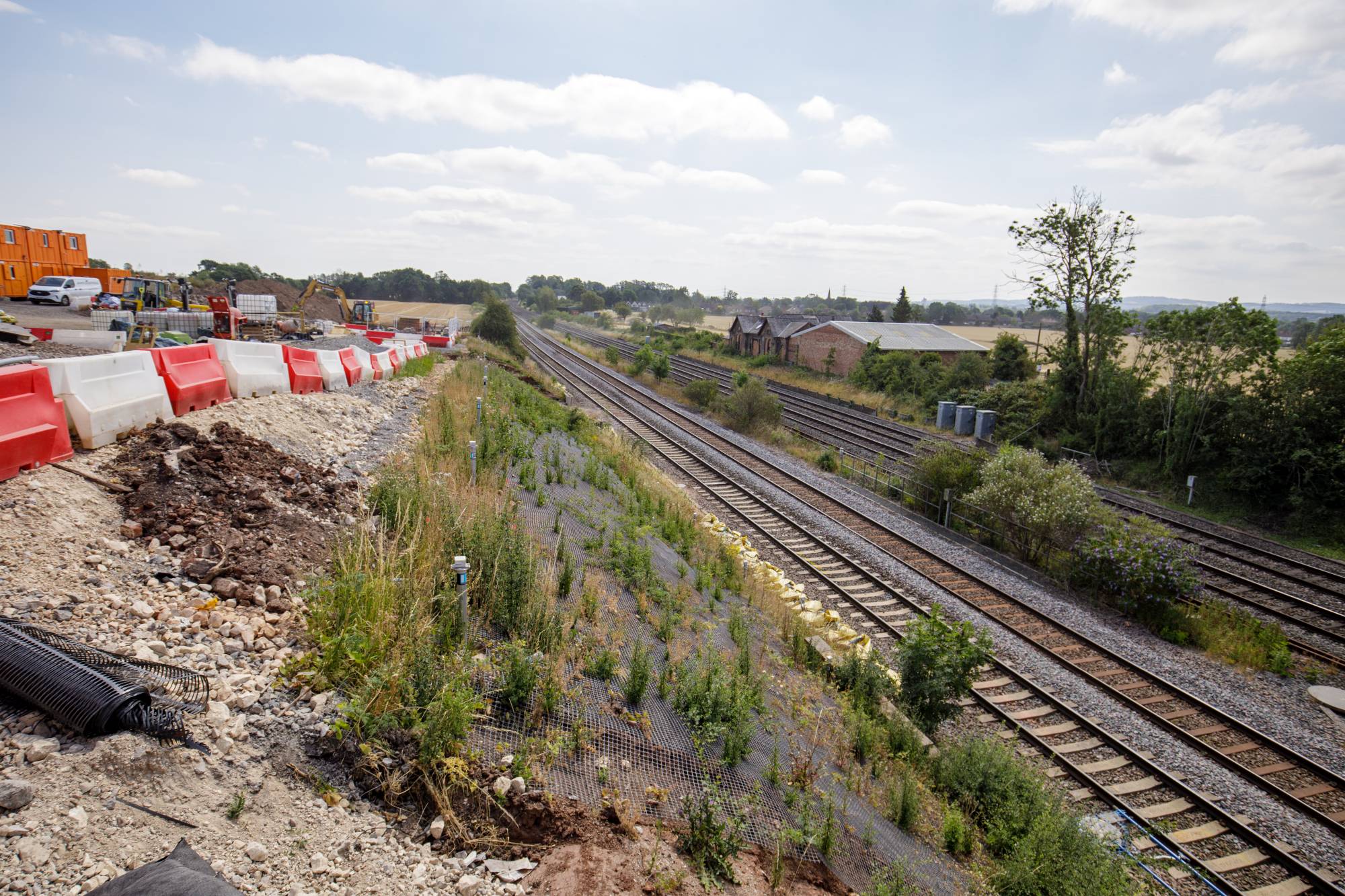
Kirk Hill Bridge sits above an operational railway, so the photography had to be completed without compromising railway safety or disrupting the remaining construction activity.
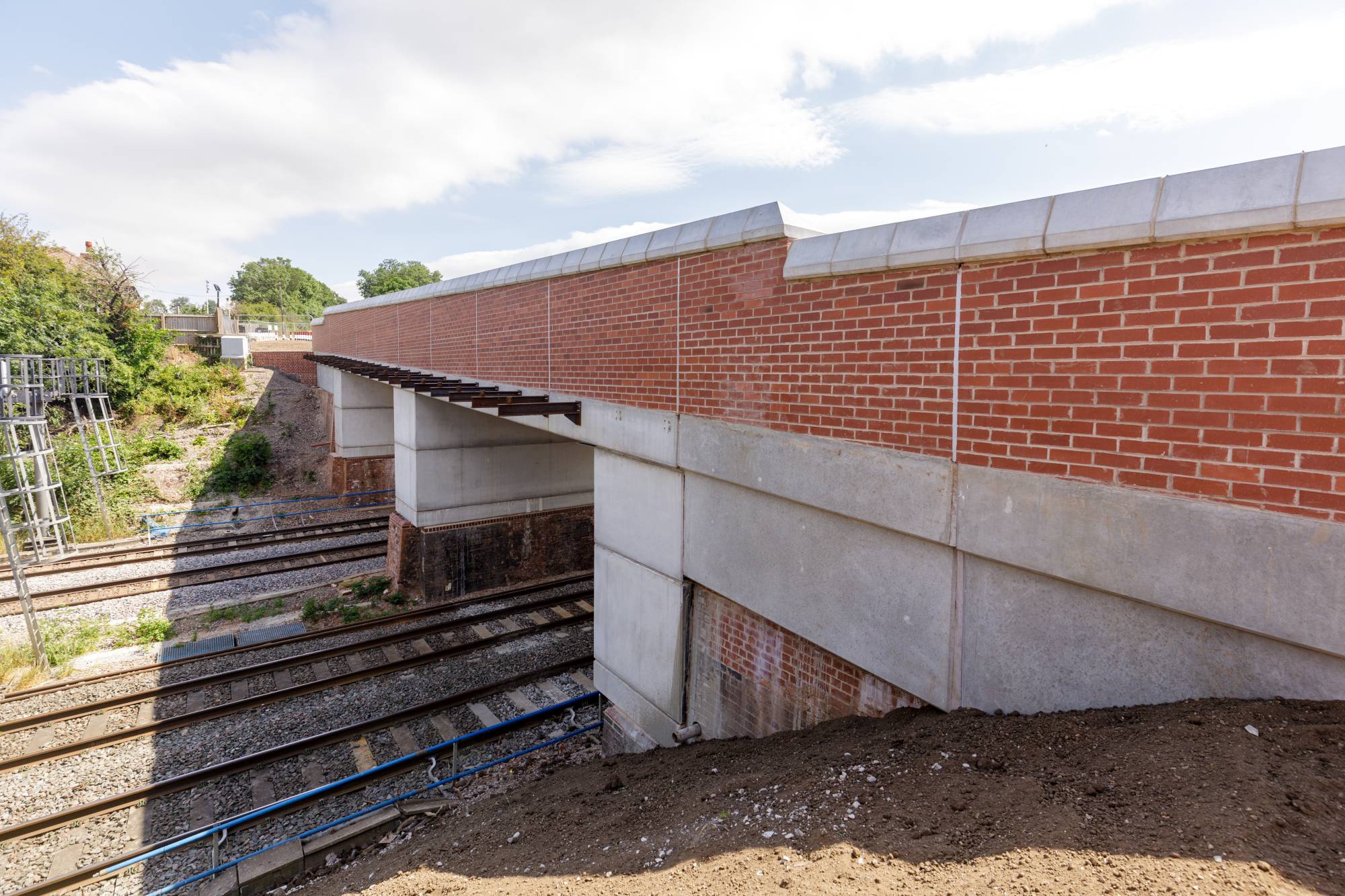
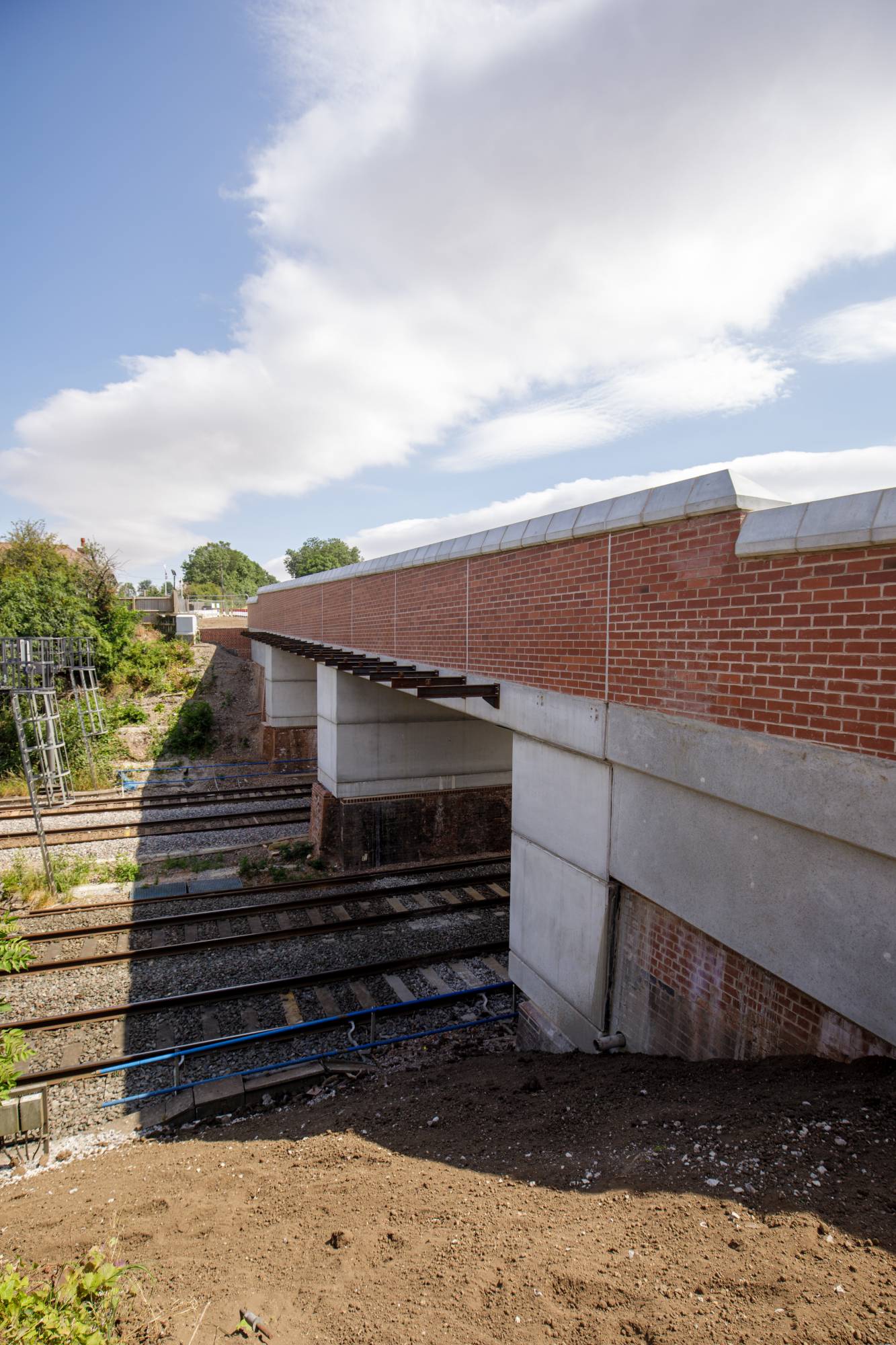
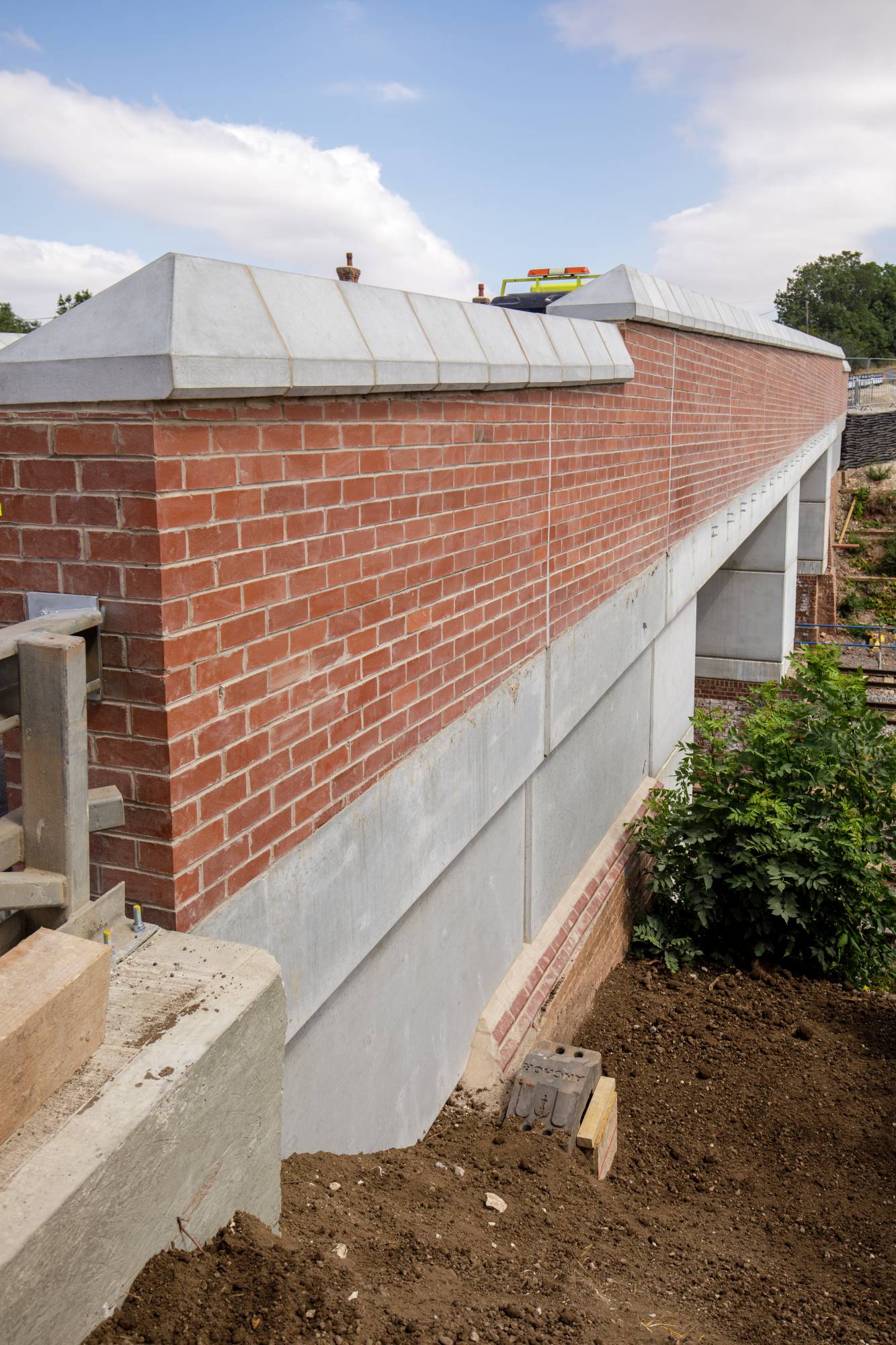
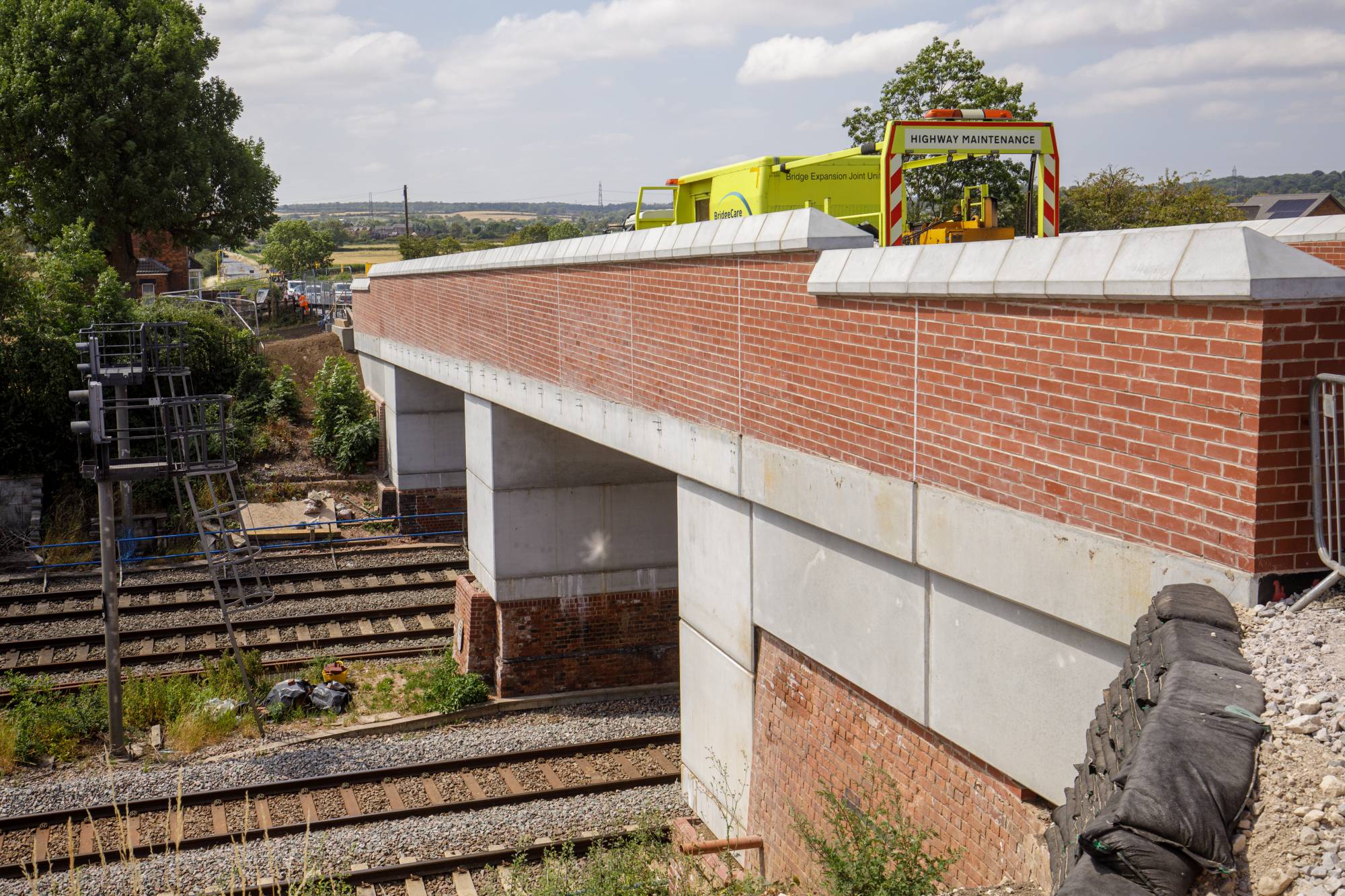
One of the most distinctive parts of the refurbishment was the extensive brickwork used to keep the completed structure in character with the surrounding area. Installing that brickwork had required temporary decking along both sides of the bridge, supported by steel cantilever beams fixed into the structure. This allowed the bricklayers to work safely while trains continued to run below.
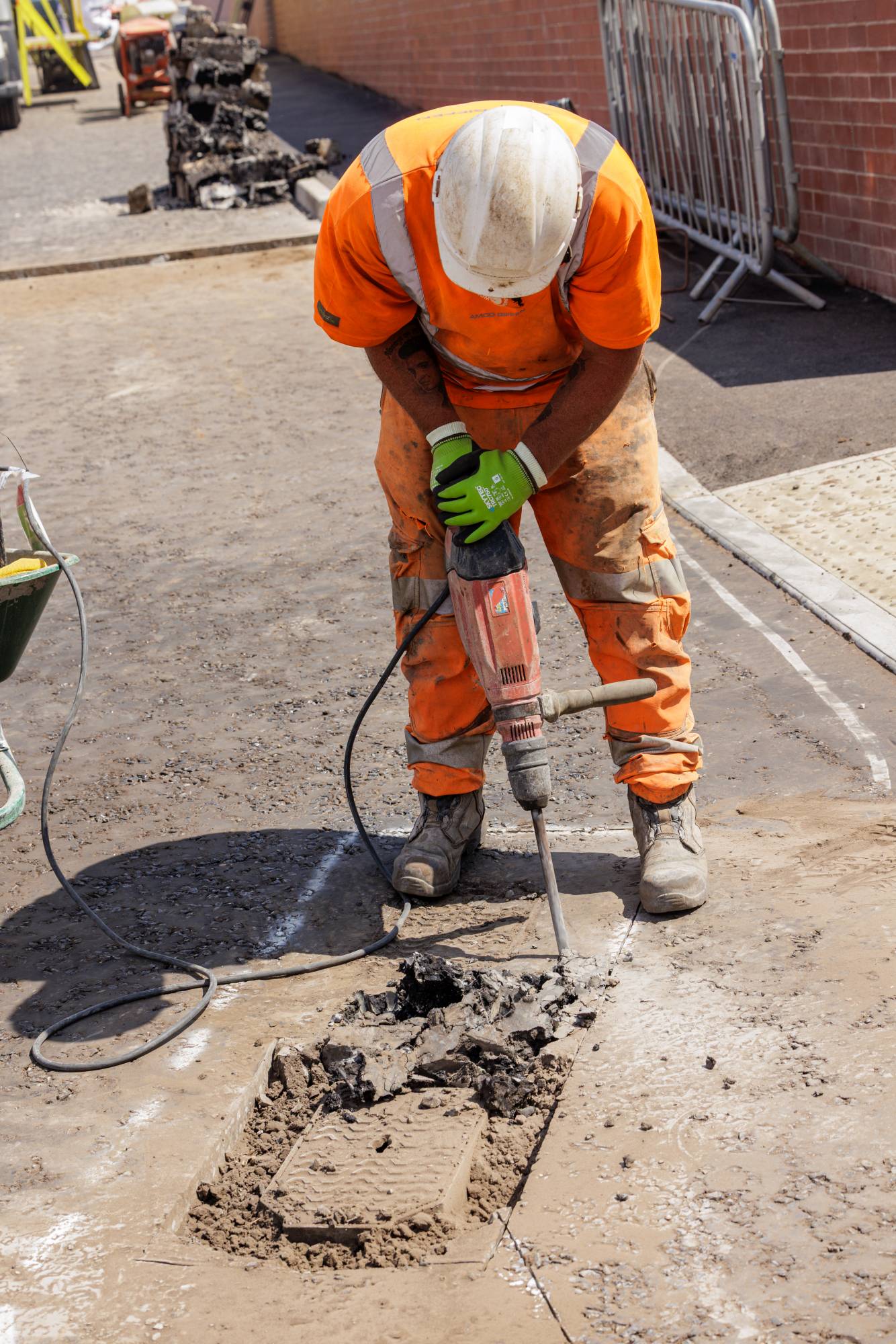
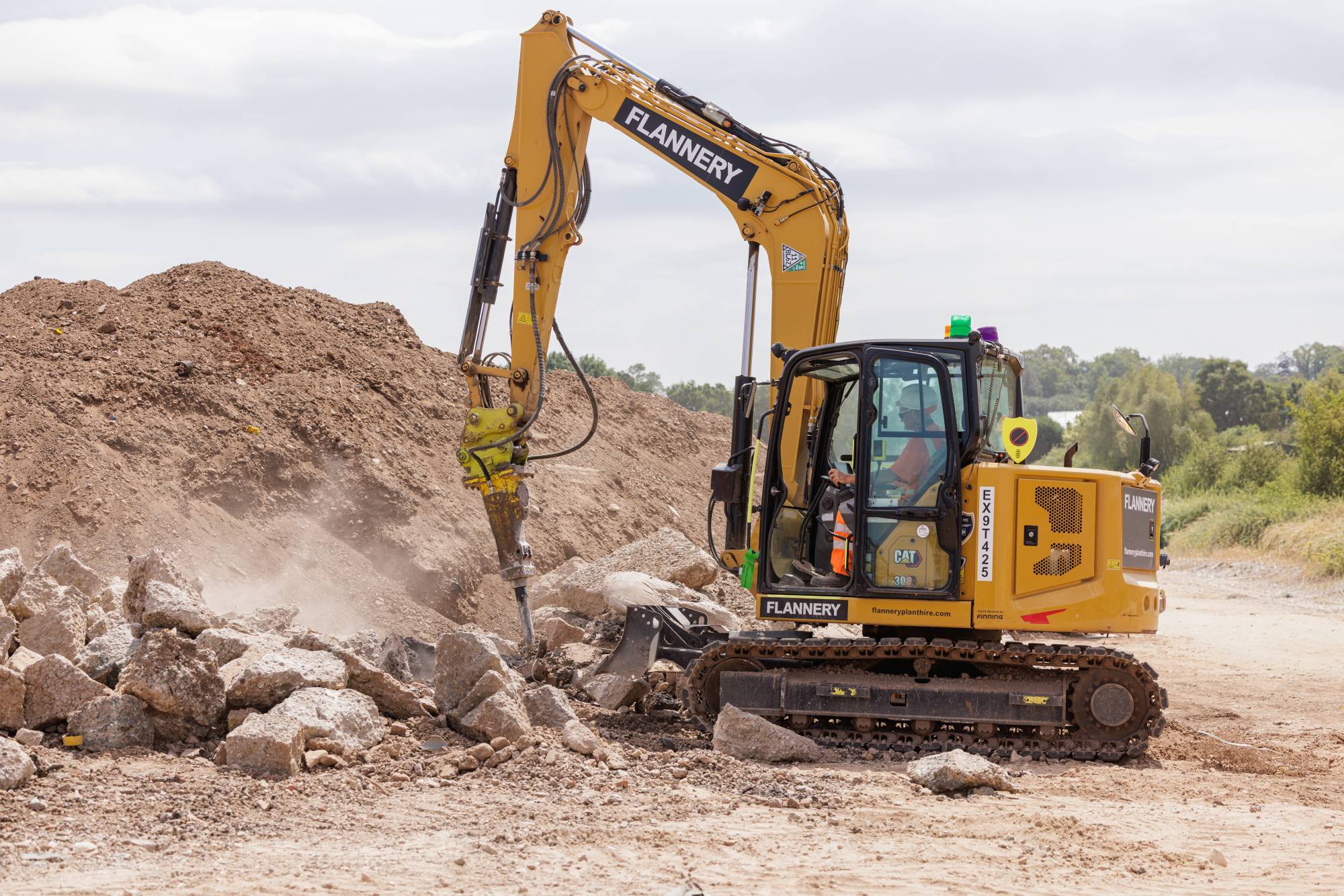
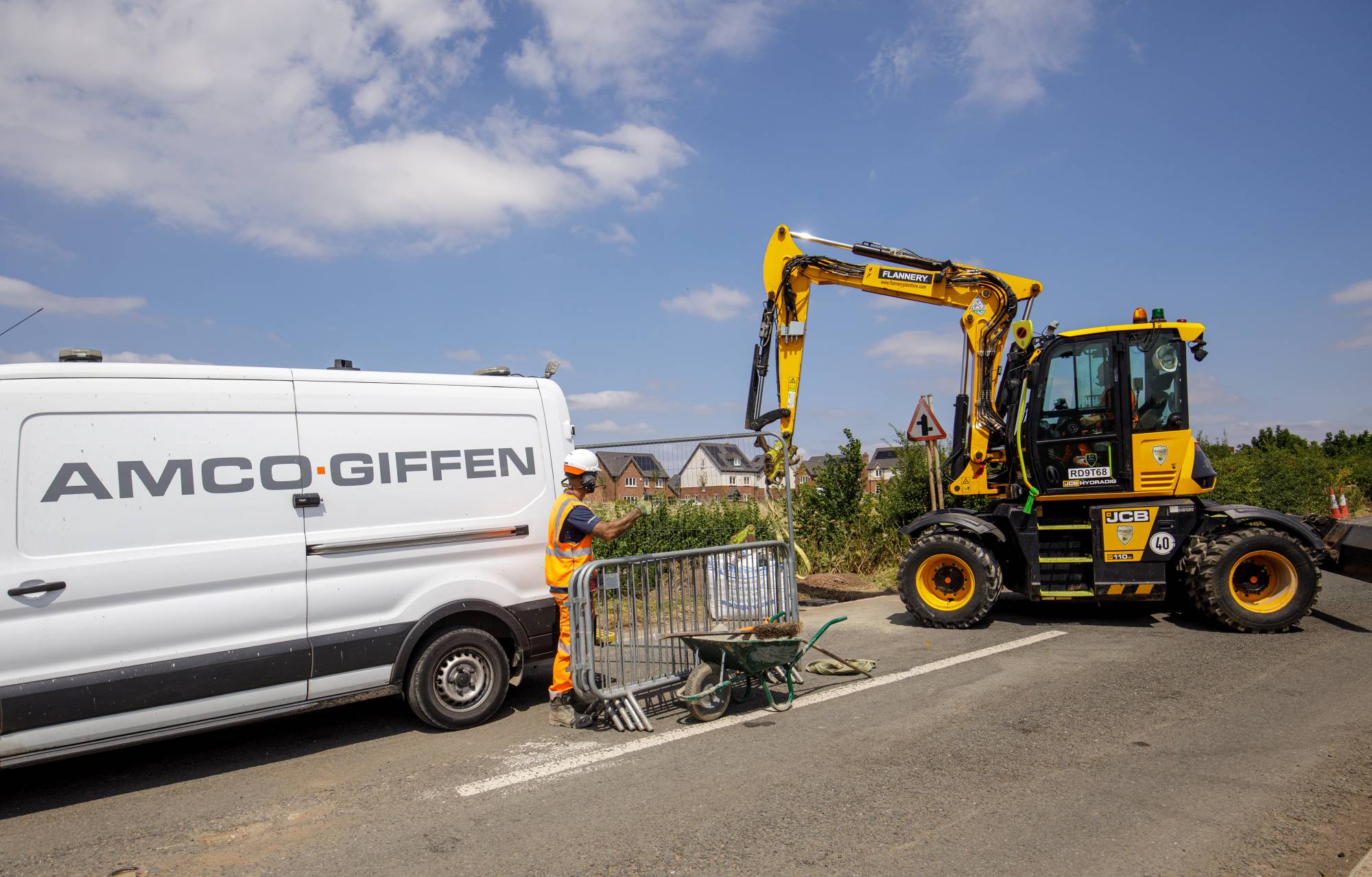
The site also included several active work areas. Subcontractors were installing expansion joints, drainage and fencing, while other operatives were using an excavator and jackhammers. The challenge was to record these activities naturally while allowing everyone to continue working.
Aerial coverage introduced an additional constraint. The drone needed to remain at least 50 metres from the railway, while still producing useful views of the bridge, the people working below and the technical details around the site.
The Creative Strategy
The coverage was planned around the different ways the project team and communications team might need to use the material.
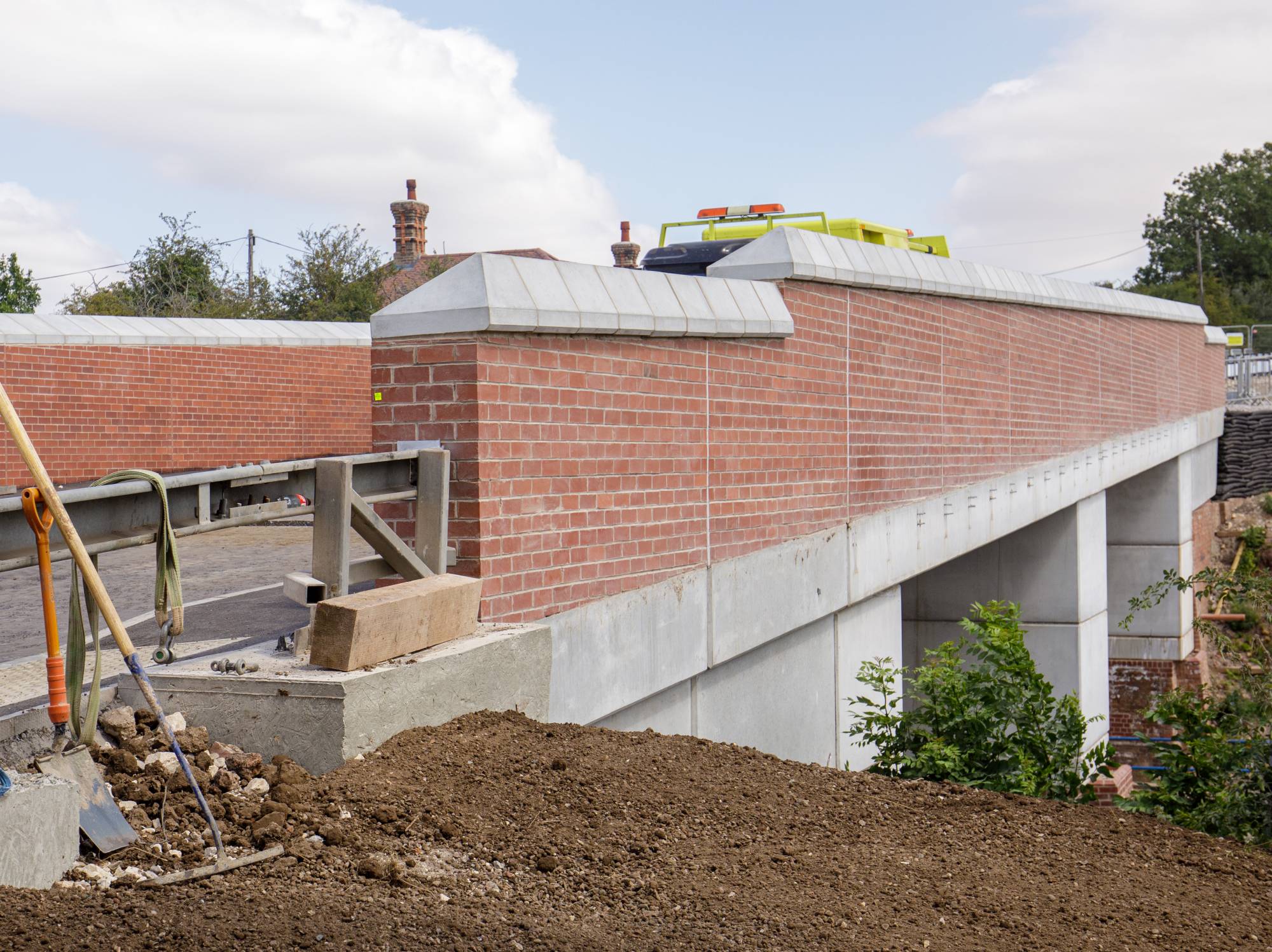
Wide photographs established the scale of the bridge, its relationship with the railway and the surrounding landscape. Closer images concentrated on the brickwork, expansion joints, drainage, fencing, temporary works and the raised kerbs on the bridge approaches.
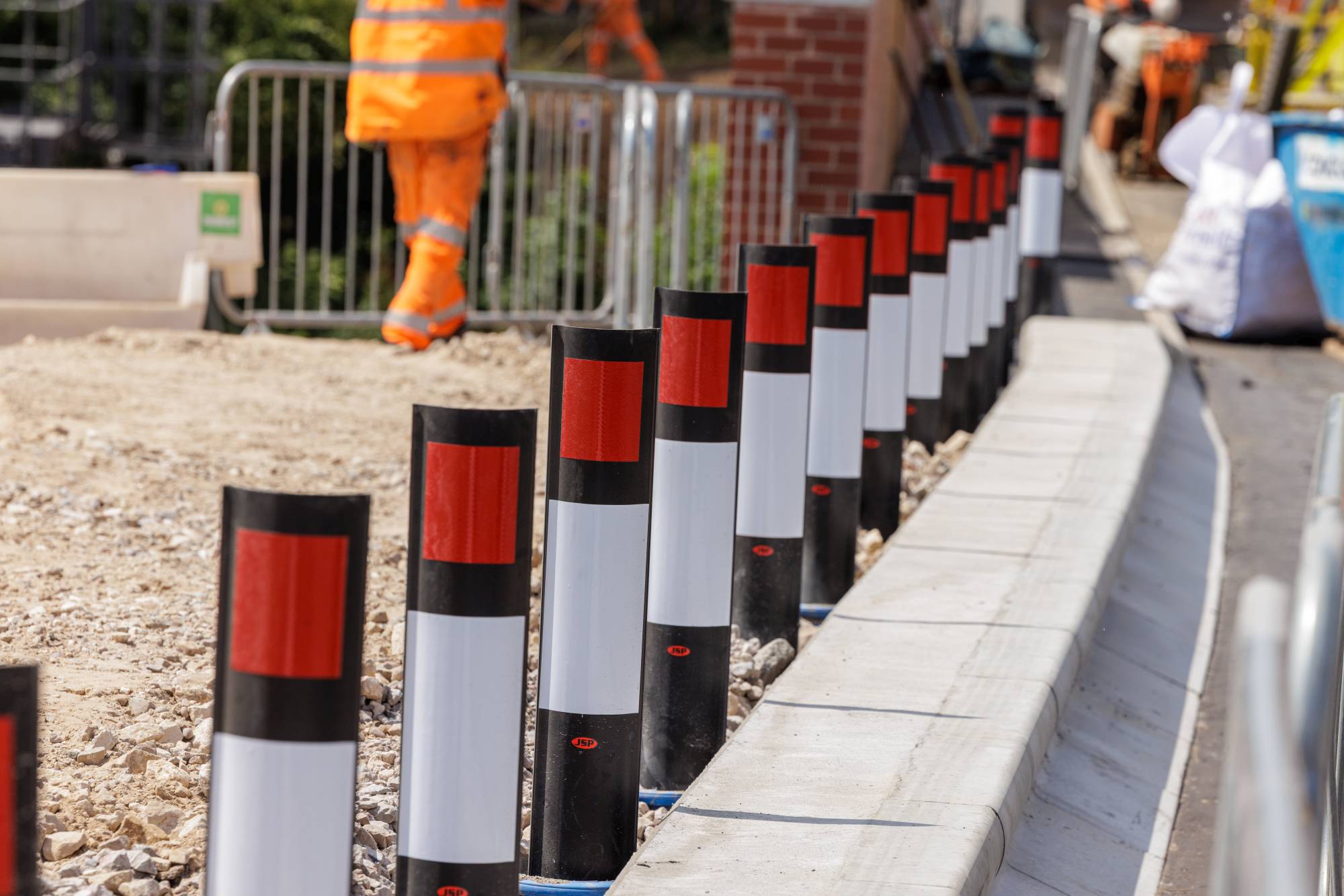
Those kerbs provided an important visual and engineering detail. As well as creating a considered finish to the road layout, they were designed to help reduce the risk of an out-of-control vehicle reaching the railway or striking the bridge structure.
The bridge was also described as having been raised to allow for possible future rail electrification equipment beneath it. Photographing the completed road alignment and the structure from several positions helped place that element of the project in context without relying on a single viewpoint.
For the aerial work, the aim was to complement rather than duplicate the ground photography. Each major subject photographed from ground level was considered for an equivalent overhead, oblique or wider contextual view.
How the Shoot Was Run
Jamie Callaghan guided the photographer around the site and helped identify the safest access points and the activities worth documenting. Having worked together previously on a headshot project provided useful familiarity and made the on-site coordination straightforward.
The shoot took place on a bright, warm day with blue skies and broken cloud. Those conditions gave the completed brickwork and infrastructure a clear, positive appearance while retaining detail in the wider site views.
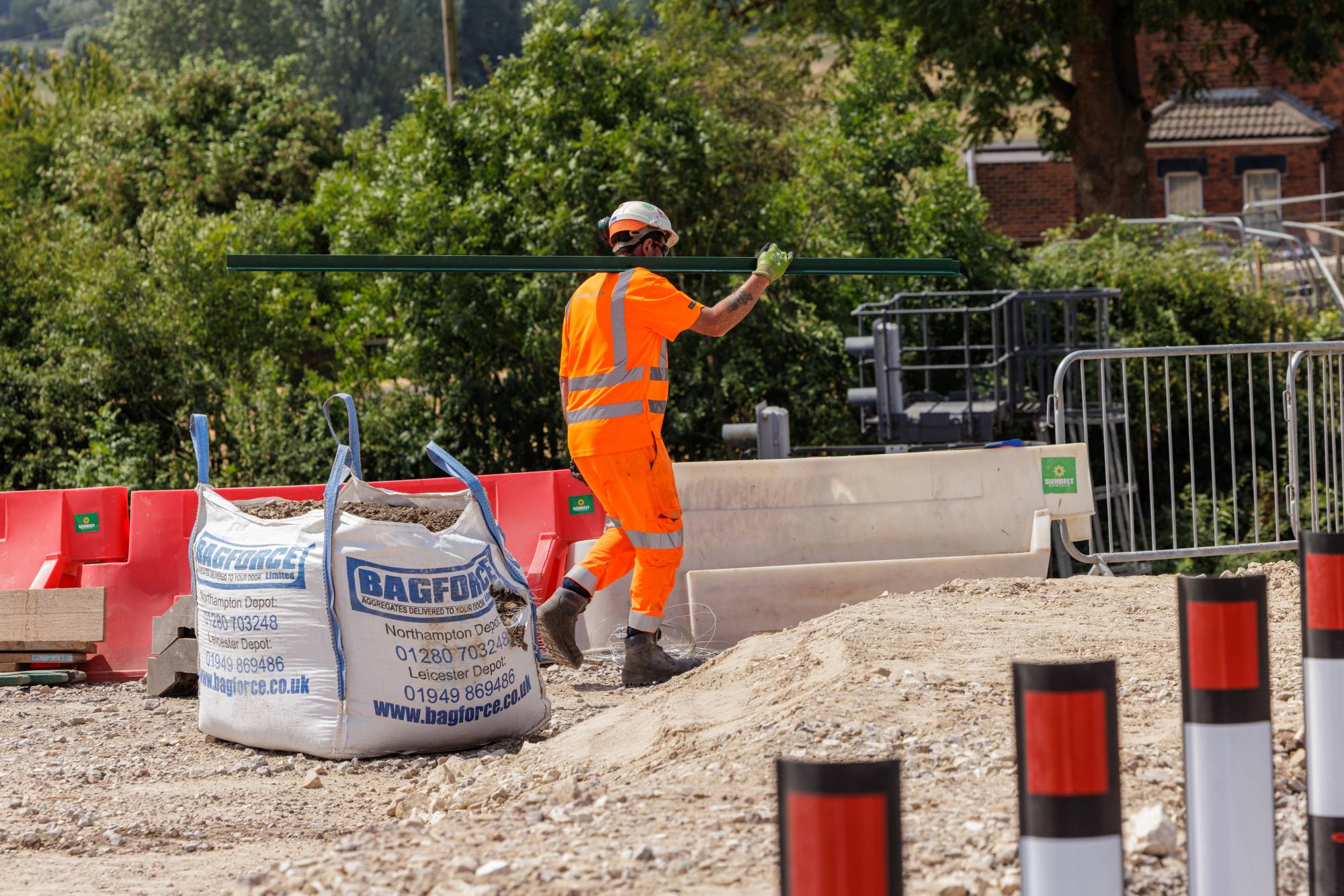
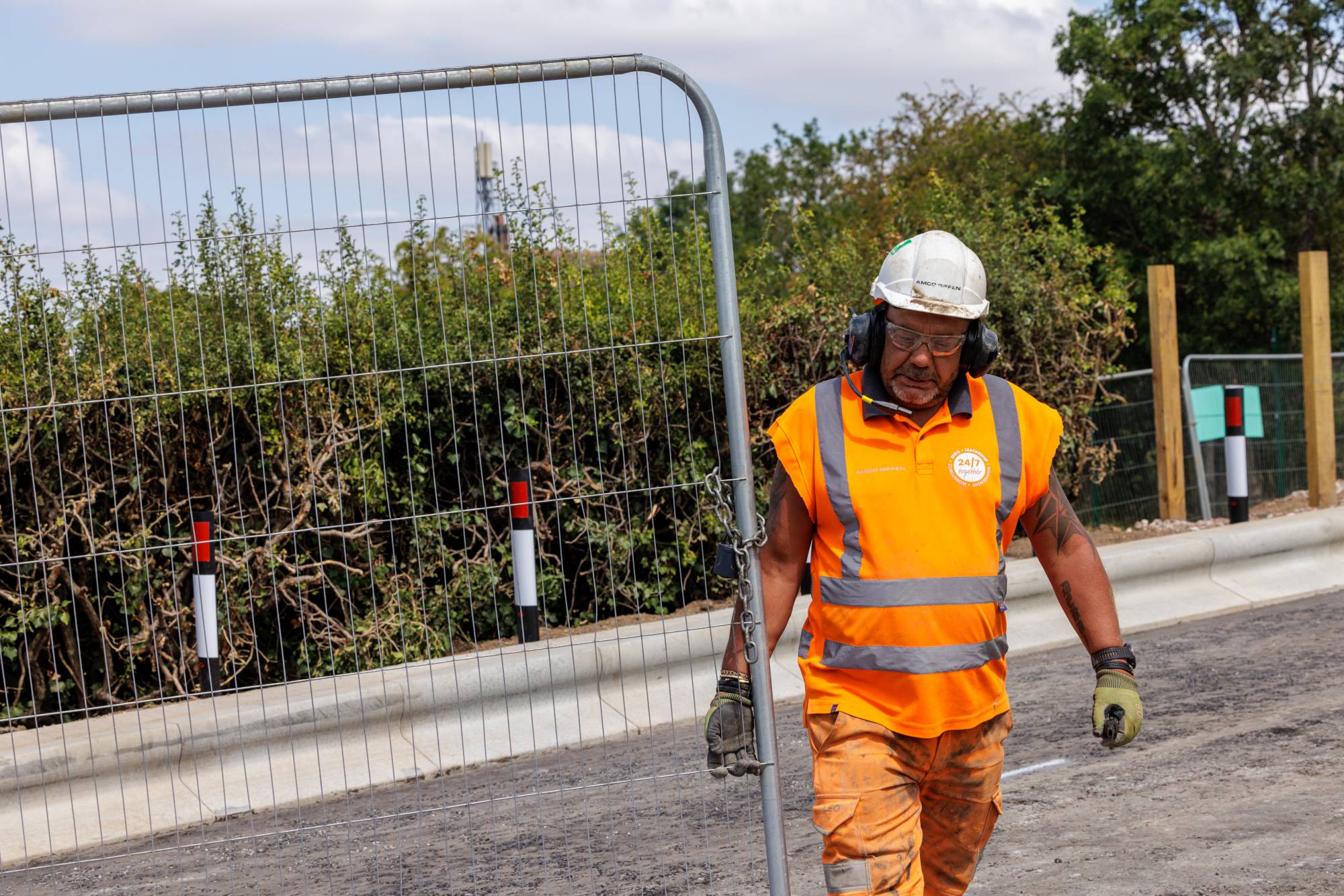
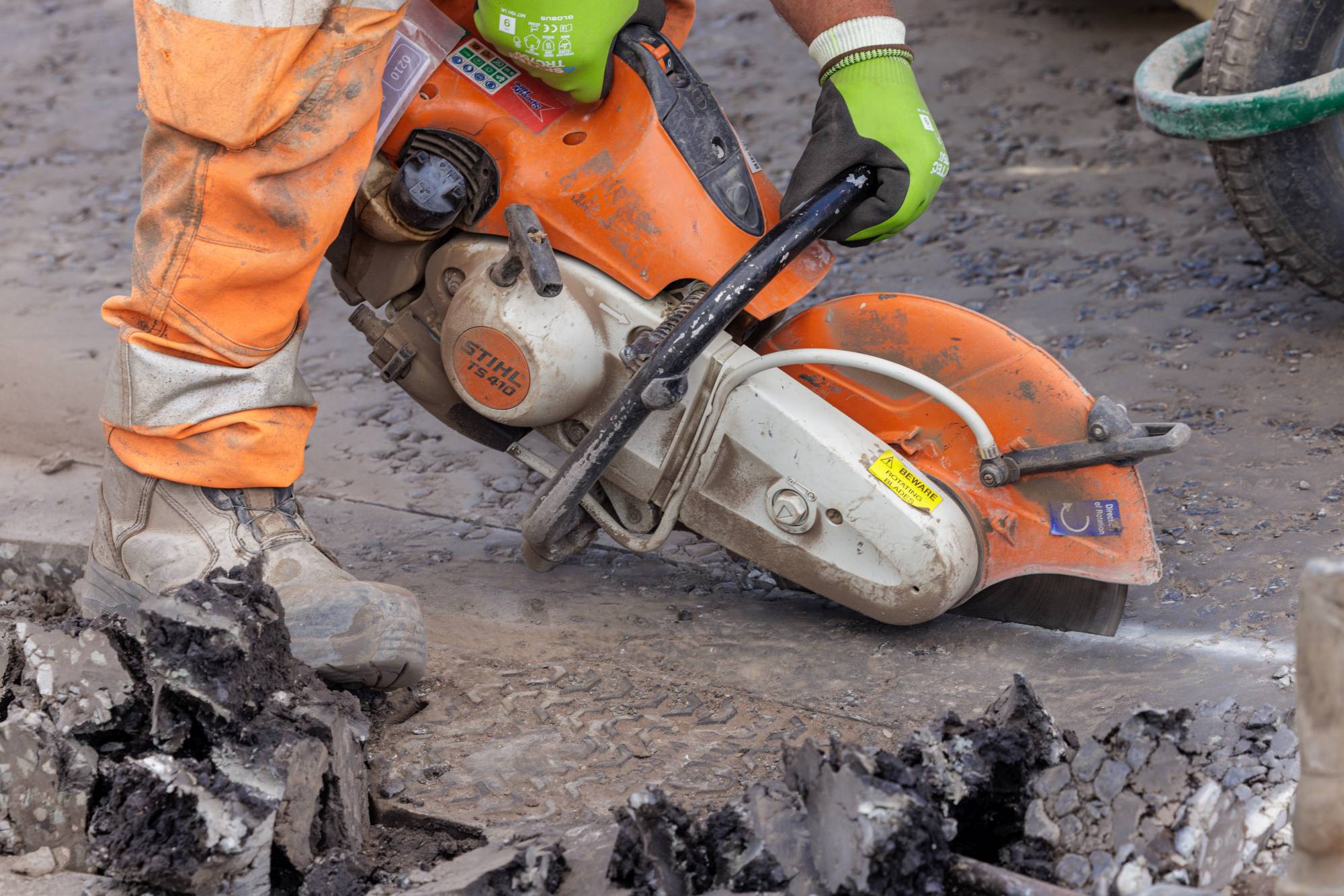
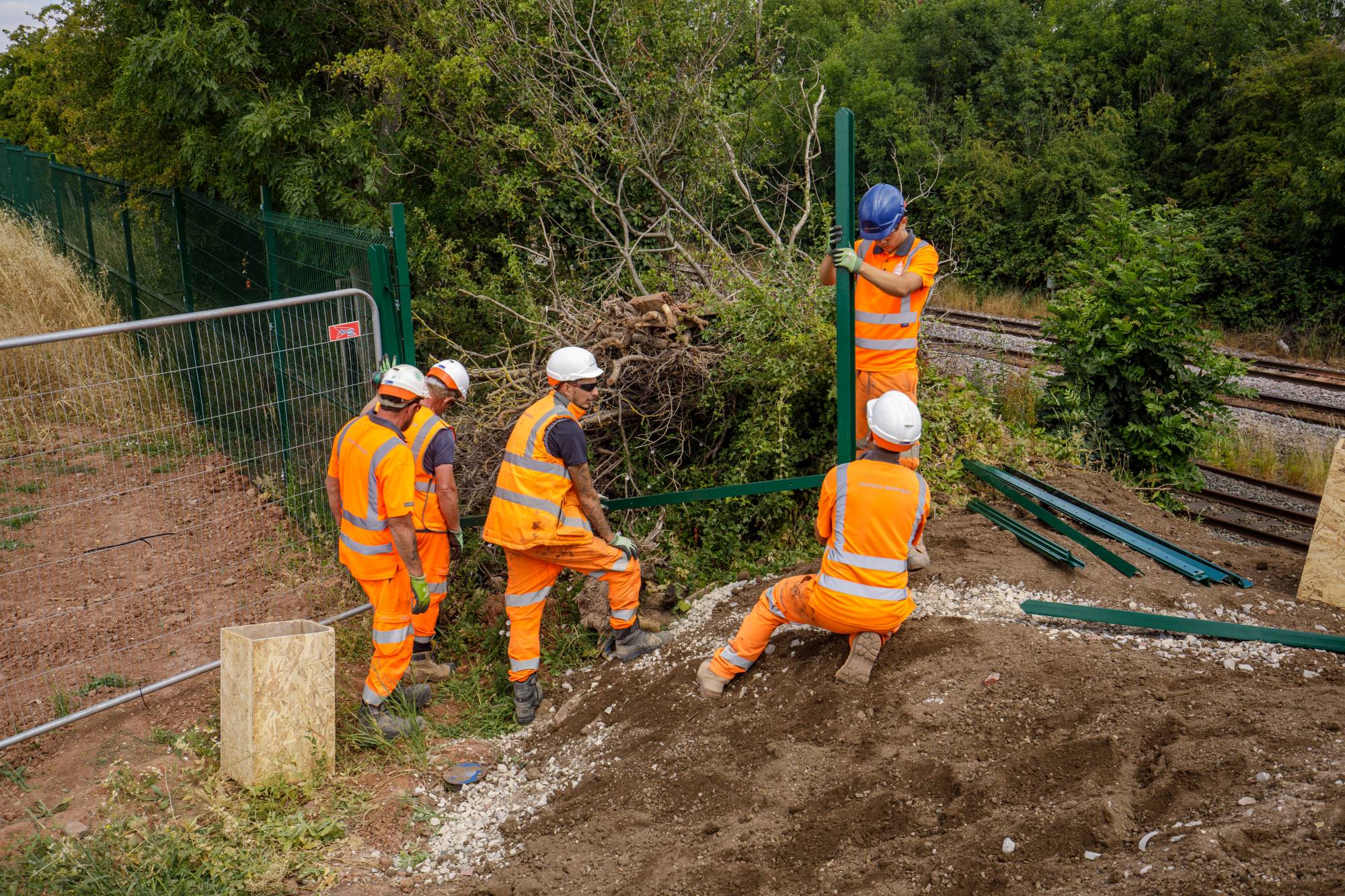
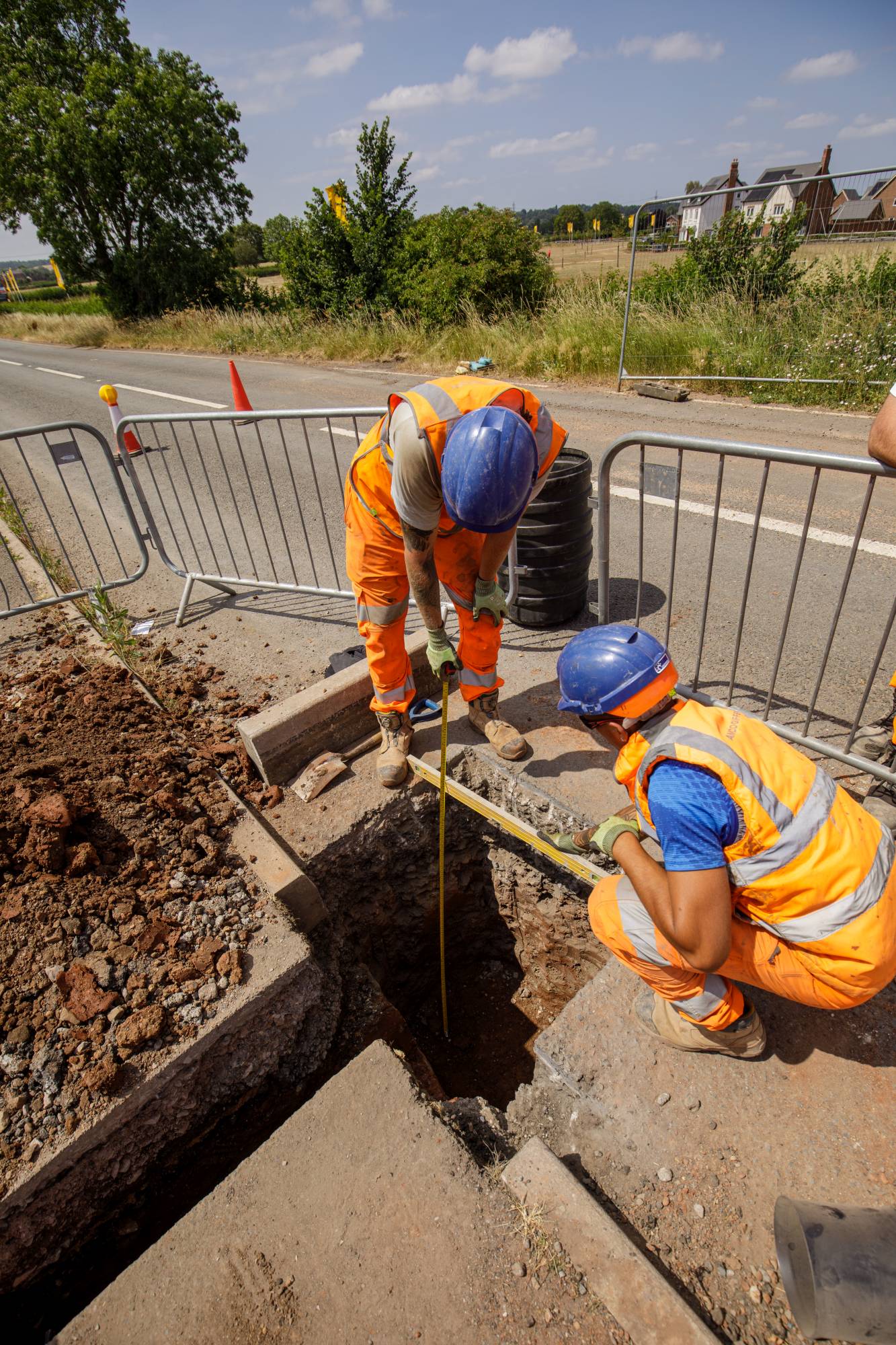
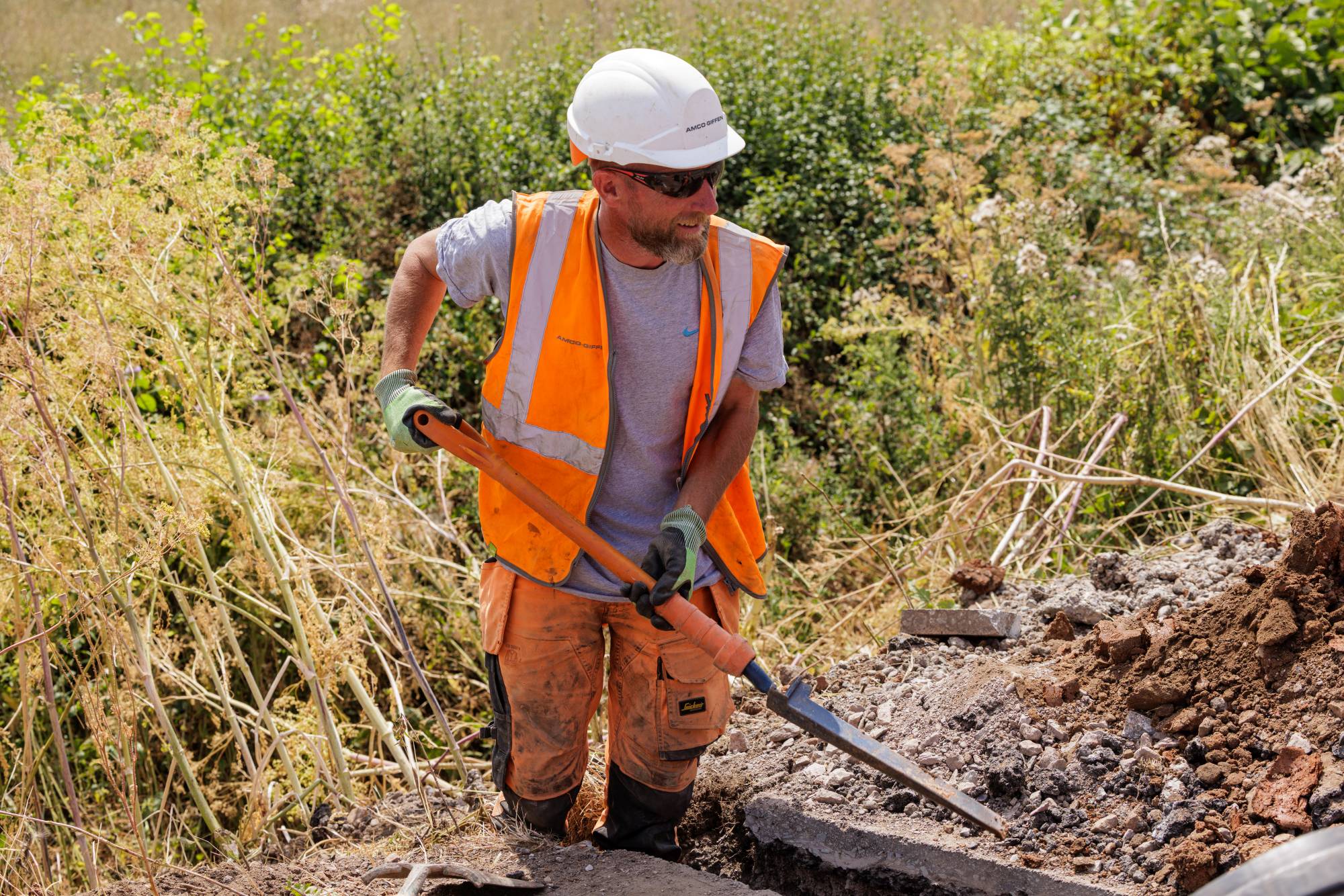
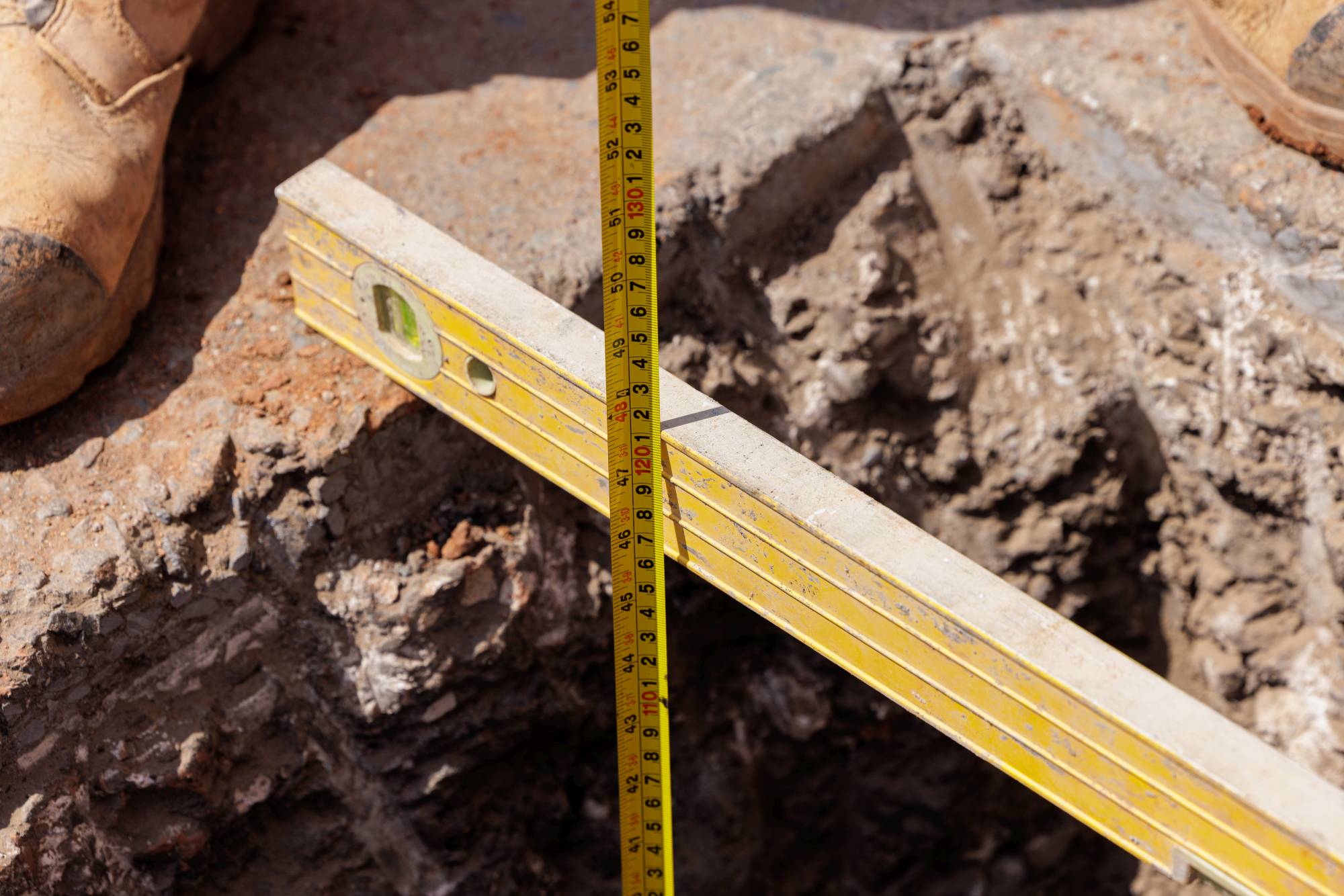
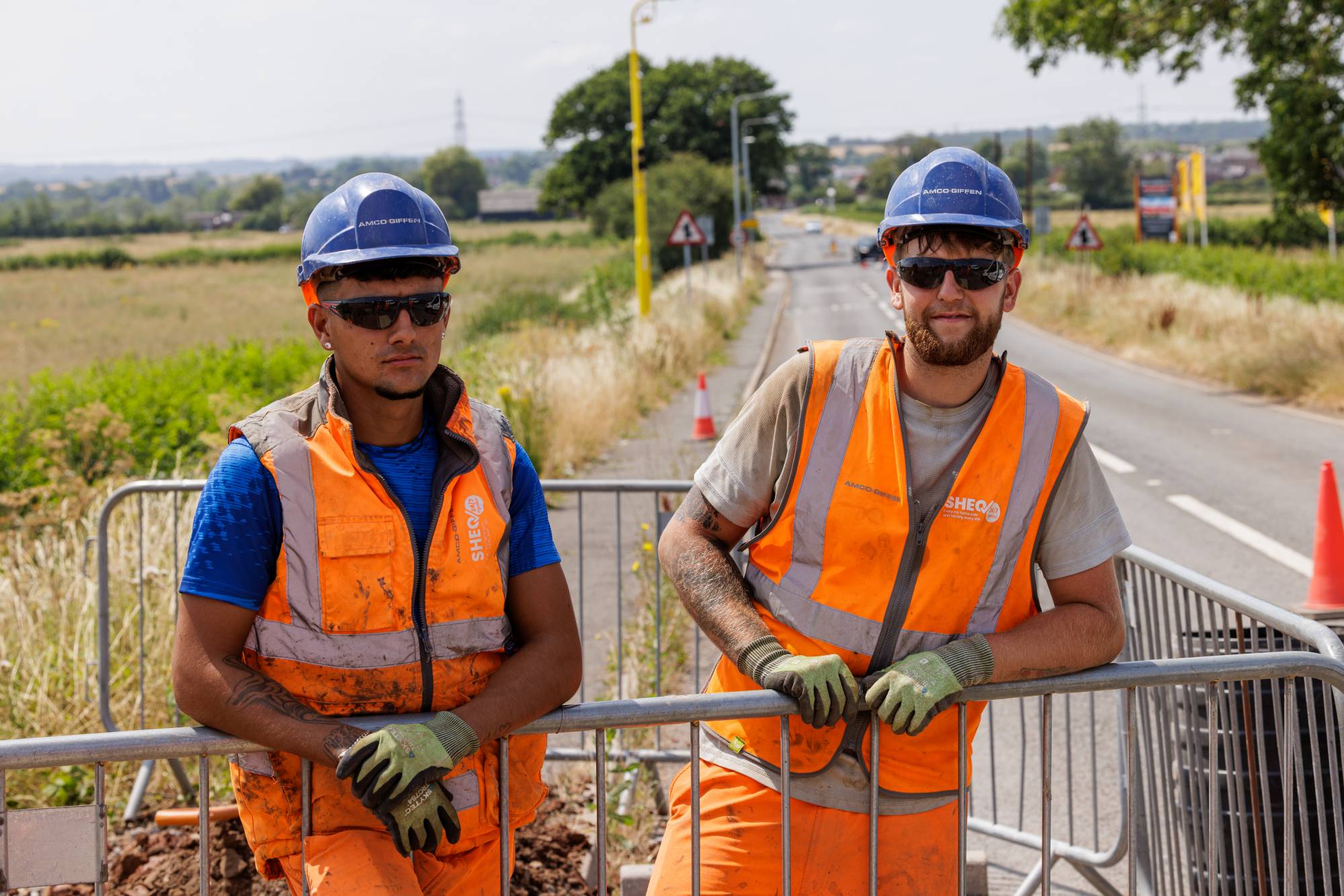
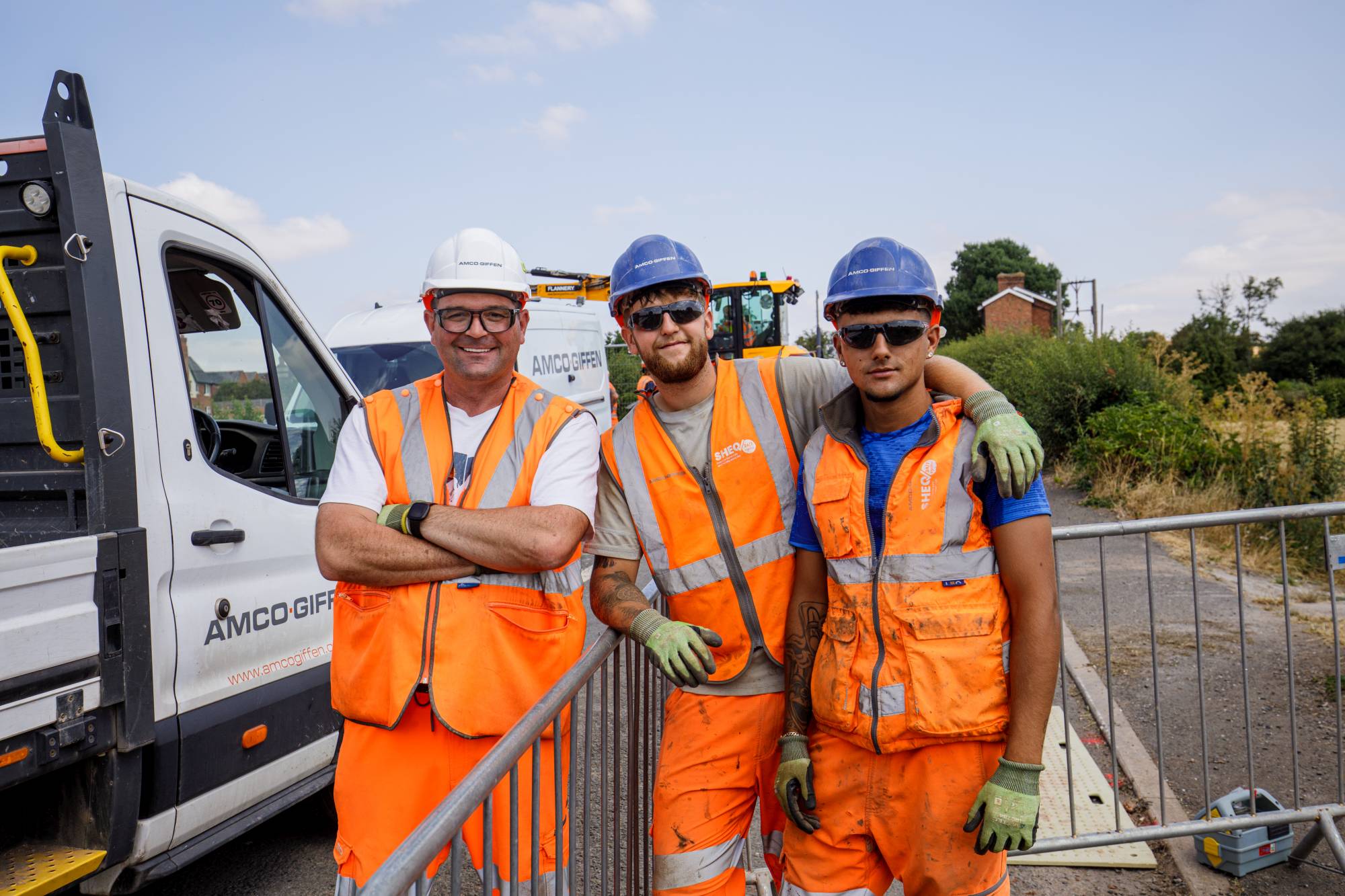
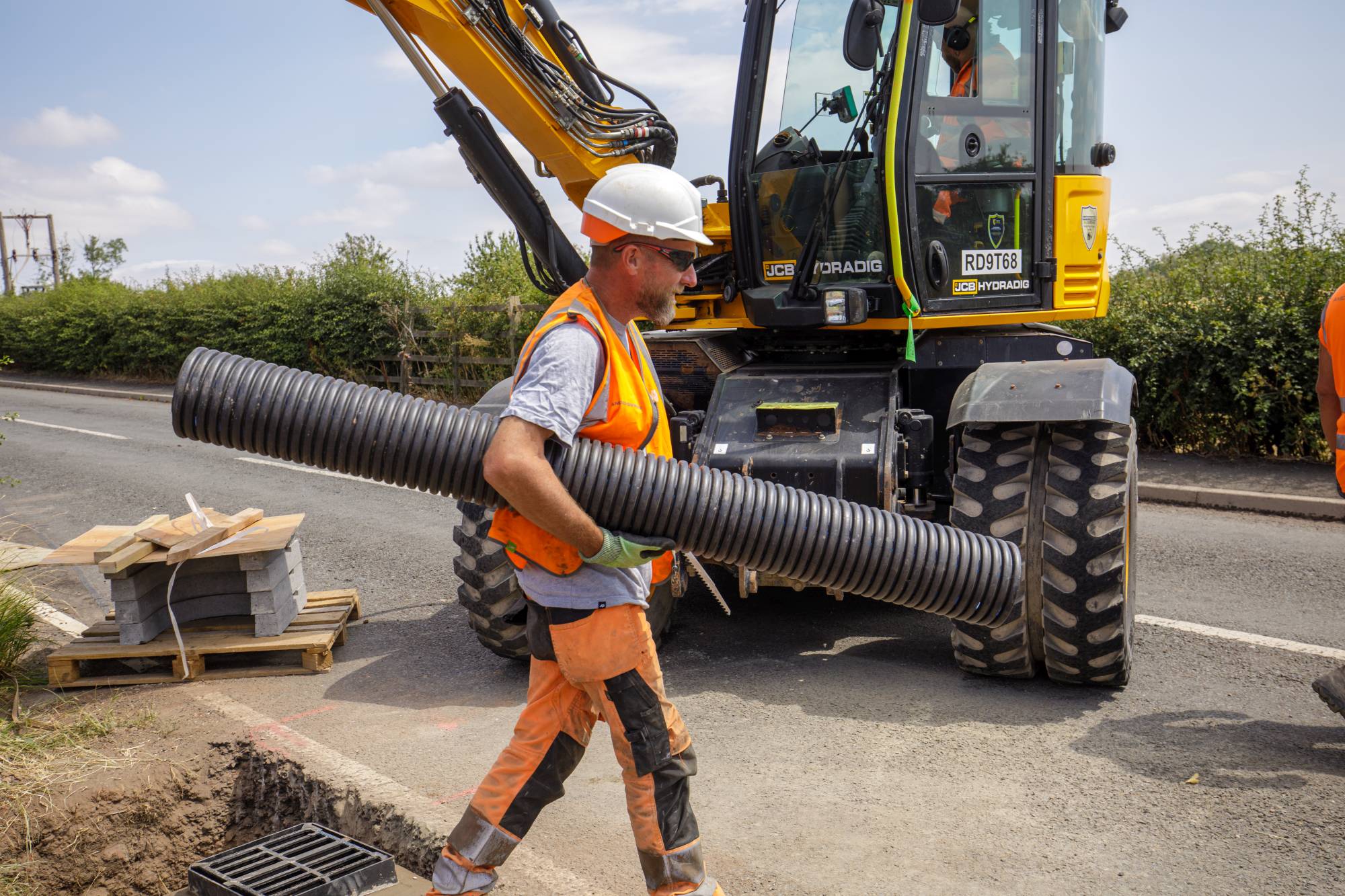
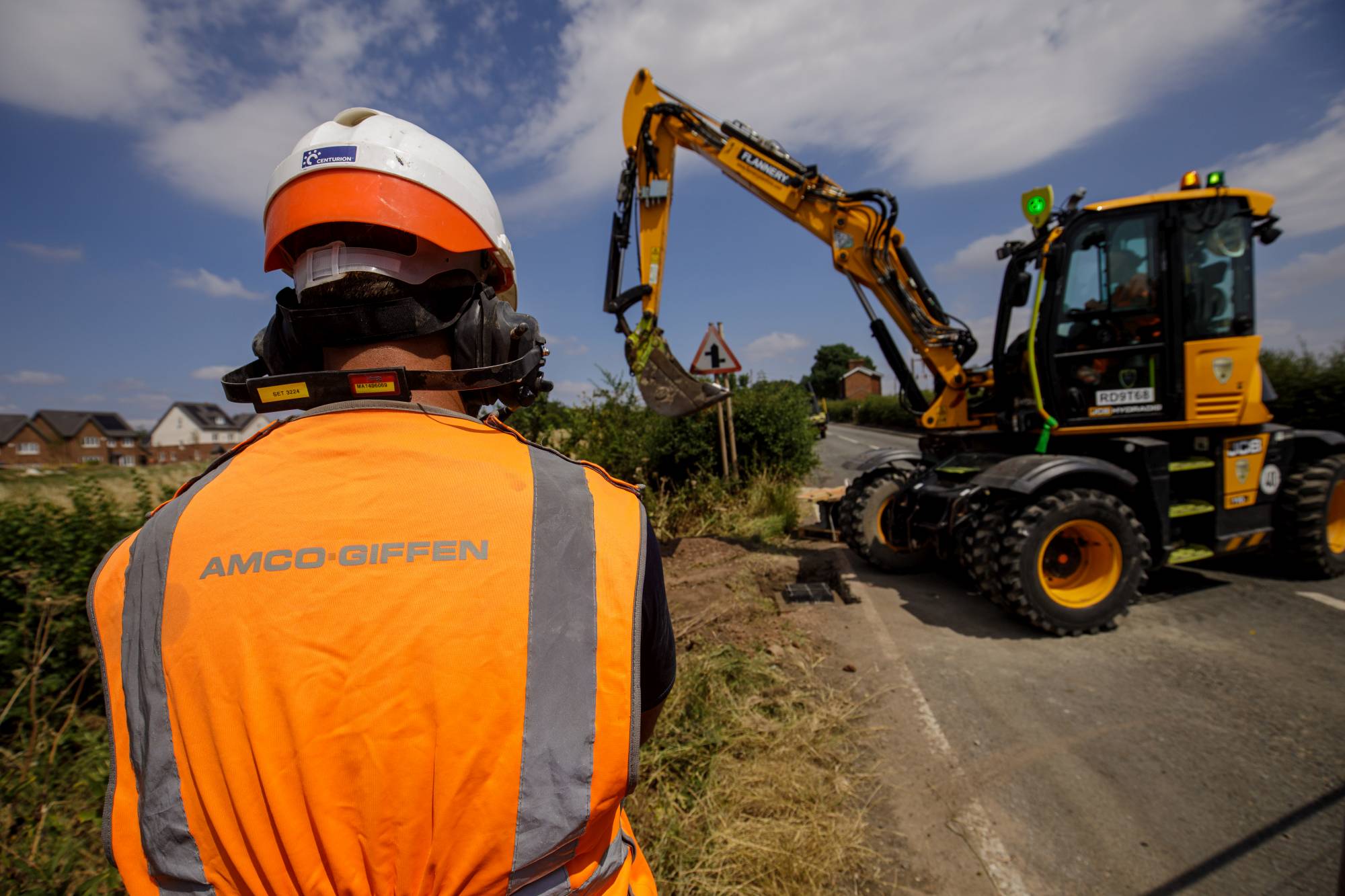
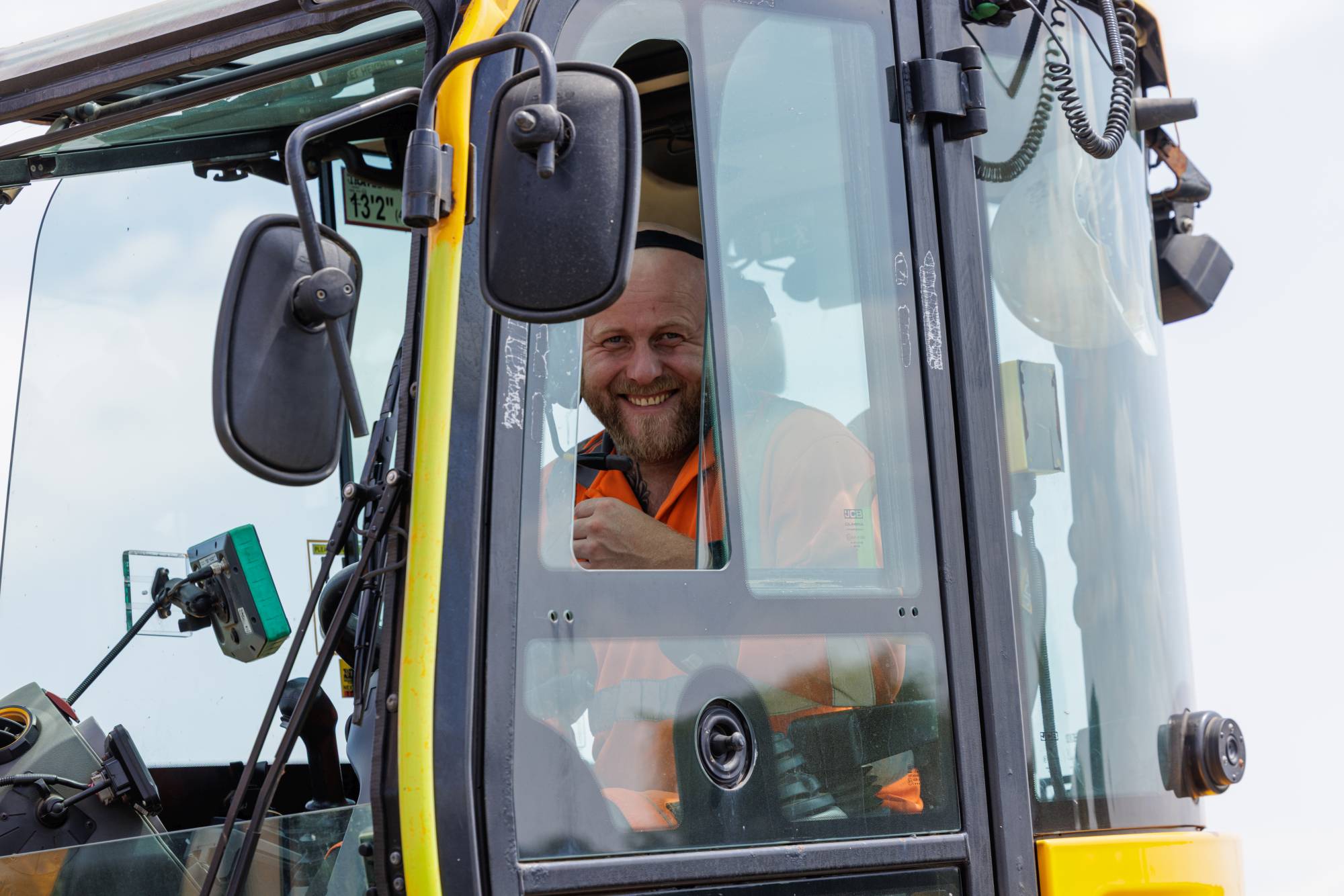
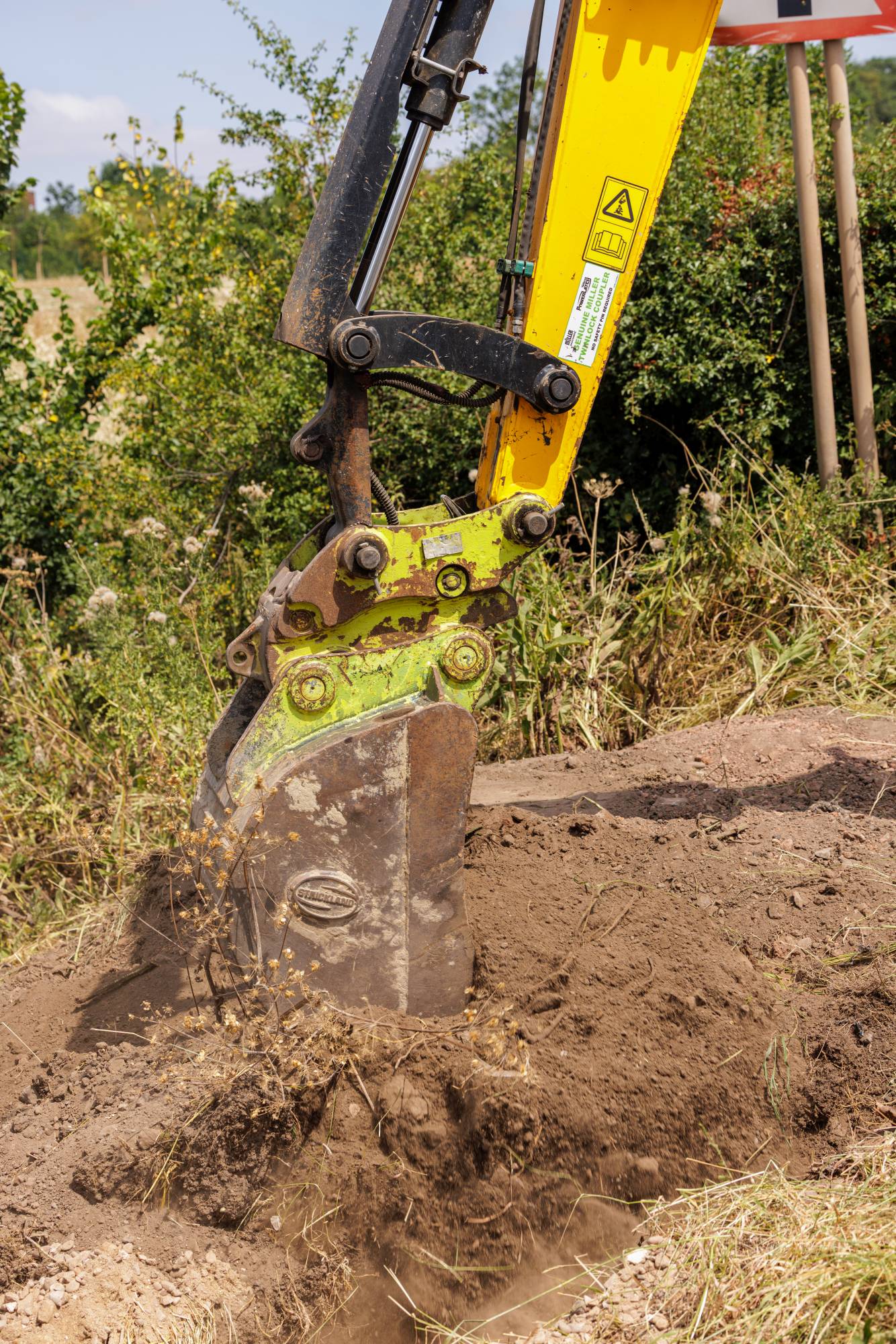
Much of the people photography was observational. Operatives were photographed while installing fencing, preparing drainage, breaking out material around drains, operating the excavator and completing other site tasks. This produced credible working images without unnecessarily interrupting the programme.
The drainage team agreed to being photographed from the air. The drone was initially kept at a comfortable distance and the 70mm lens was used to create tighter-looking images. After checking with the team, a directly overhead view was also captured from approximately 20 feet above them. The longer lens made the resulting image feel closer while maintaining physical separation.
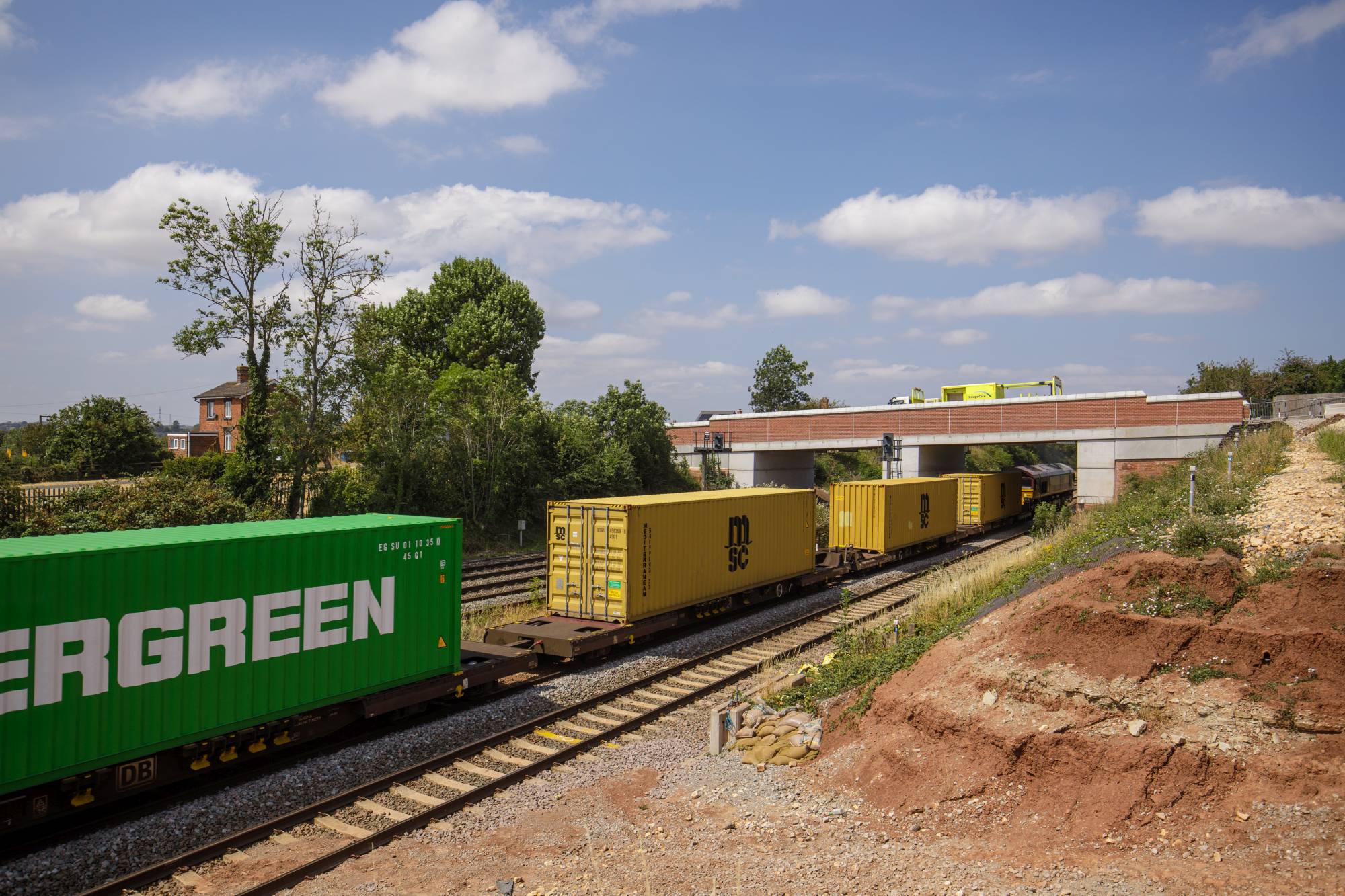
Passing trains were incorporated whenever possible. They added movement and context while making it immediately clear that the bridge crossed a working railway.
Selected Images
The completed bridge and local brickwork
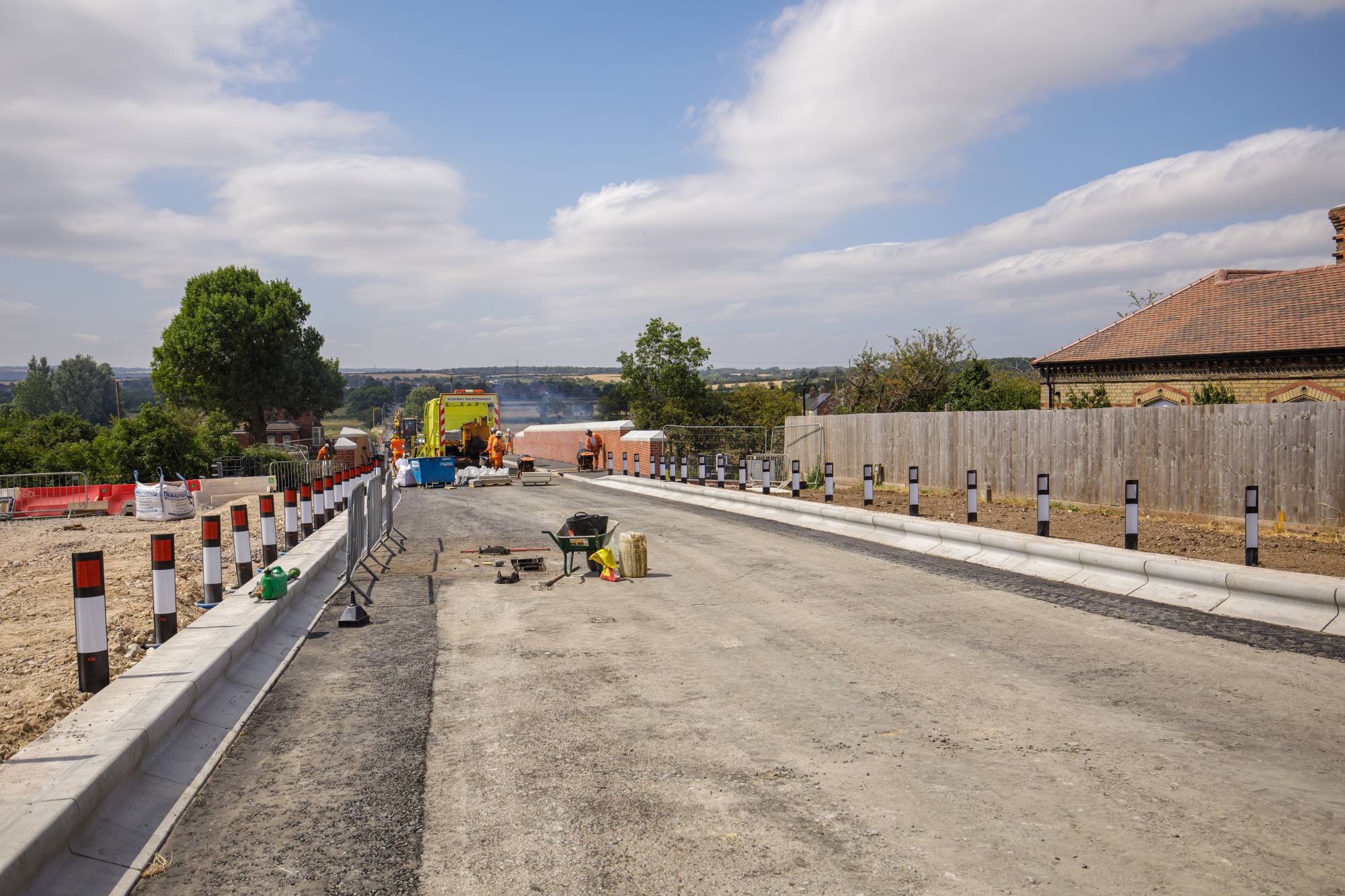
Views from both sides of the railway showed the finished bridge, the embankments and the scale of the brickwork. These images provide strong lead photographs for project completion stories, presentations and website features.
Temporary access and cantilever structures
Detail photographs recorded the steel cantilever beams and temporary works used to support the bricklaying operation. These images help explain how the team delivered the architectural finish while maintaining railway operations below.
Expansion joint installation
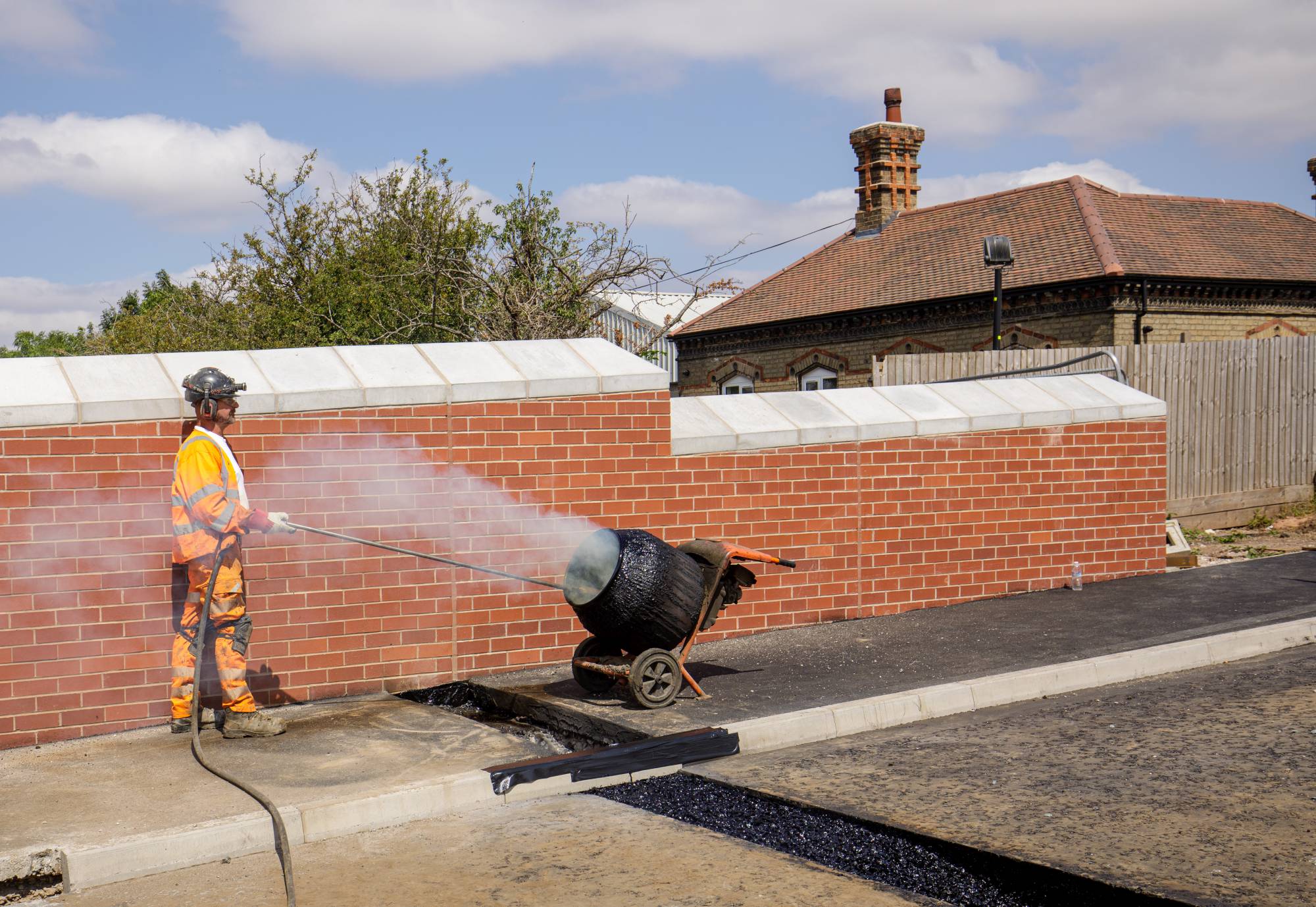
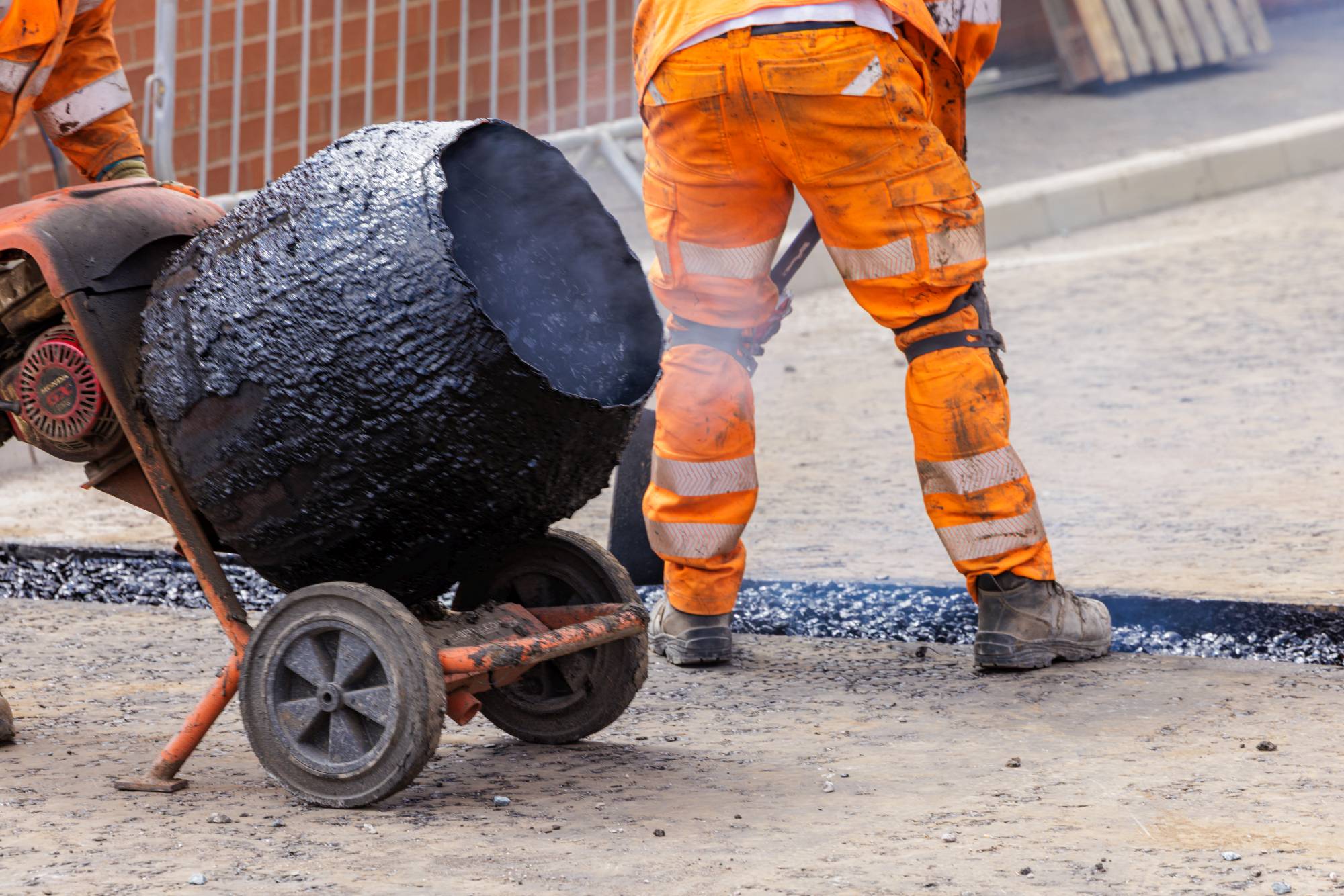
The bridge care subcontractor was photographed installing expansion joints at both ends of the bridge. The process included loading aggregate into a mobile barrel and using a heated poker to bring the material to a workable consistency before it was poured and manipulated into place.
Close views of the equipment, heat and smoke added visible action while also showing a specialist part of the construction process that is rarely apparent in photographs of the finished structure.
Drainage, fencing and active site work
Images of operatives digging, installing drainage and erecting fencing gave the communications team a selection of people-focused photographs. The activity, tools and personal protective equipment make these suitable for project updates, recruitment communications and broader civil engineering content.
The new road layout and safety details
Photographs of the bridge approaches showed the raised kerbs, completed road alignment and the relationship between the road, bridge and railway. Wider views explain the layout, while closer images provide useful technical and design details.
Ground and aerial perspectives
The 24mm drone lens was used for broad site overviews, while the 70mm lens isolated the bridge, individual work areas and people on site. This created a more varied collection without moving the aircraft closer to the railway.
Behind the Scenes
The drone video coverage included parallel passes along the compound side of the project, semicircular movements that kept the bridge central in the frame and crane-style reveals that began low before rising and tilting down towards the site.
Wide aerial sequences established the full project, while the 70mm lens provided more focused views of the bridge and individual areas of activity.
Approximately 13 minutes of selected clips were prepared so AmcoGiffen could reuse individual sequences in reception displays, presentations or future video edits. The strongest material was also condensed into an approximately two-and-a-half-minute film with music, speed changes and varied transitions to maintain pace and visual interest.
What Was Delivered
Ground-level project photography of the completed bridge and surrounding site.
Detailed photographs of the brickwork, temporary works, expansion joints, drainage, fencing and road layout.
Natural photographs of operatives and subcontractors working on the live site.
Wide and telephoto drone photographs from multiple safe viewpoints.
An extended selection of reusable drone video clips.
A shorter edited project film with music and varied pacing.
The Results
The finished collection gave AmcoGiffen more than a conventional completion record. It combined polished views of the refurbished bridge with evidence of the people, planning and specialist processes behind the project.
For the project team, the images provide a clear visual account of the structure as it approached reopening. For the design and communications team, the mix of hero images, technical details, working photographs and aerial footage creates a flexible bank of material that can be adapted for different channels.
The brighter weather, visible site activity and passing trains helped the finished material feel active and positive while remaining grounded in the reality of the project.
Client Quote
“The video was fantastic, as were the photographs.”
AmcoGiffen client feedback
Is this right for you?
This approach is well suited to civil engineering, rail, infrastructure and construction teams that need to document a project without creating unnecessary disruption on site.
It is particularly useful when the finished structure is only one part of the story and the communications team also needs photographs of people, processes, temporary works, safety features and the wider environment.
It is not suitable where photography or drone operations cannot be accommodated safely within the site rules, or where unrestricted proximity to operational rail infrastructure would be required.
Book a planning call
A planning conversation can establish the required permissions, site constraints, priority activities, intended communication channels and the balance between ground photography, aerial imagery and video.